وتار
The Risk of ISIS Resurgence Amid Kurdish Abandonment and Prisoner Releases
Saturday, 01.24.2026, 03:04 PM
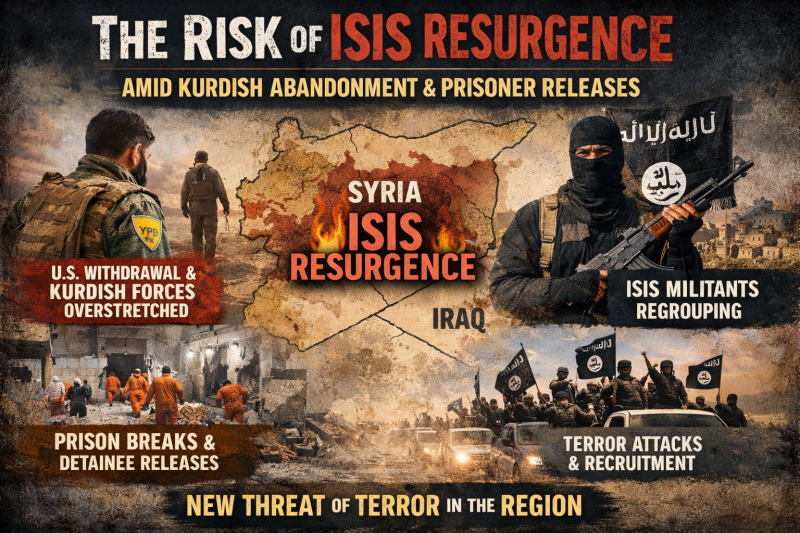
Many people in Europe still do not fully understand the seriousness of the current situation in northern Syria. Recent developments on the ground present a significant security risk not only for the Middle East but also for Europe and the wider international community.
The al-Julani government is celebrating the release of so-called "Cubs of the Caliphate" who were being held in al-Aqtan prison in Raqqa.
In recent days, videos have surfaced showing large numbers of Islamic State (ISIS) prisoners who had previously been detained in Kurdish-run prisons. These individuals had remained in custody for years under the control of the Syrian Democratic Forces (SDF), the Kurdish-led force that played a central role in defeating ISIS
territorially.
However, following new political and military arrangements, the SDF transferred control of several prisons and detention facilities to the Syrian Armed Forces. Shortly afterward, reports indicated that many detainees were released or escaped amid the chaos and lack of proper security. As a result, individuals suspected of ISIS involvement are now free.
This development raises serious concerns. Without strong oversight, detention, and prosecution, these former fighters may regroup, reorganize, or return to extremist activities. Some could potentially travel back to their countries of origin, including European states. If this happens, it may create new security threats far beyond Syria’s borders.
The Kurdish forces had long warned the international community about this exact danger. For years, they guarded thousands of ISIS prisoners and managed large camps holding families of extremists, often with limited resources and little international support. Despite their sacrifices in the fight against terrorism, the Kurdish population has increasingly been left isolated, facing military pressure, political instability, and what many describe as systematic persecution.
If the world continues to ignore the Kurdish people and withdraw support from the forces that once contained ISIS, the consequences could be severe. Weakening Kurdish control over prisons and security operations creates a power vacuum that extremist groups can exploit. History has shown that ISIS thrives in such conditions of instability.
In short, abandoning the Kurdish forces does not only endanger them — it risks enabling the rebirth of ISIS itself. The international community, particularly Europe, must recognize that regional security in Syria is directly connected to global security. Preventing the resurgence of ISIS requires continued support for stable local partners, proper detention of extremists, and coordinated international action.
Failing to act now could allow the same threat the world fought so hard to defeat to rise once again.
ئەو بابەت و هەواڵانەی کە ناوی نووسەرەکانیان دیار و ئاشکرایە، تەنیا
نووسەرەکەی بەرپرسیارە، نەک تەڤداپرێس


بابەتی تر
دلێر محەمەد نوری: ژن پڕۆژەیەک بۆ کیفاح یان بو جیهادی نیکاح؟
ڕەنجدەر گڕاوی: The throwing of a Kurdish girl from a building by Jolani’s terrorist forces
مەشخەلی ژیانەوە: کورد و شەهیدو ئومەت و ئاینی لەقەتونراو!
دلێر محەمەد نوری: سڵاوێک لە جەنەڕاڵەکەی ڤێتنامەوە بۆ جەنەڕاڵ عەبدی
Mattie Moore: مۆدێلی یەکگرتن و کۆتایی سەردەمی بارزانی
Sherwan Sherwani: The Cold of Prison and the Mandela Award
Mattie Moore: بەردەوامی زیندانیکردنی شێروان شێروانی بووەتە بابەتێکی جیهانی بۆ ئەمریکا
ڕەنجدەر گڕاوی: سێ زانیاری سەیر لەسەر دادگایی ئەمڕۆی شێروان شێروانی
ڕەنجدەر گڕاوی: Another unfair punishment, against journalist Sherwan Sherwani
ڕەنجدەر گڕاوی: هۆکاری قبوڵ نەکردنی گۆلدن ڤیزای ئەمریکی بۆ پاڤێل تاڵەبانی چیە؟
وێنە

مسعود بارزانی دوای سەرنەکەوتنی لە رواندنی ددانی دەستکرد
براوەی کۆنگرەی چواردە

ململانێی نێوان بنەماڵەی بارزانی
جاشایەتی ئال بارزانی بۆ ئەردۆغان

تابلۆکانی شەهیدانی قەلەم لەکوردستان
راپرسی