راپۆرت

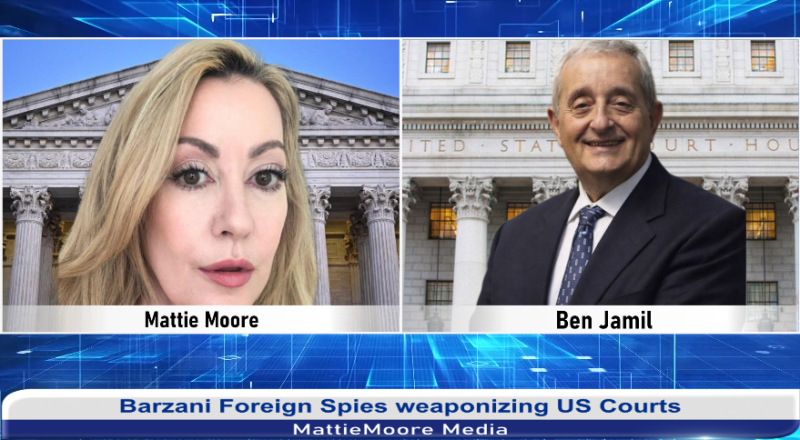
Zero-Click Espionage and Legal Lawfare: Inside the $460 Million Spyware Scandal Rocking the U.S. Courts
Wednesday, 03.25.2026, 05:30 PM
A shocking federal lawsuit filed in the Southern District of New
York has pulled back the curtain on a clandestine world where high-tech
surveillance, international espionage, and the American legal system collide
At the center of the $460 million dispute is a zero-click
spyware tool a digital weapon so potent it can hijack any smartphone
without the user ever touching a link, and allegations that a foreign
intelligence agency used a suburban Virginia shell company to infiltrate the
U.S. market
The lawsuit, filed on February 27, 2024, paints a cinematic picture of a business deal gone wrong, involving the Kurdish Regional Government (KRG), a New York businessman, and a team of high-powered American lawyers now accused of acting as unregistered foreign agents
Access the complete podcast discussion between Jamil and Matai via the following link
The Holy Grail of Surveillance
The saga began in late 2022 when Afan Shirwani, the sole owner of Virginia-based ASO LLC, reportedly approached New York businessman Ben Jamill of HSS Development Group. Shirwani claimed to be looking for a specific capability for the KRG: a "zero-click" surveillance system
Unlike traditional malware, which requires a user to click a phishing link, zero-click technology exploits hidden vulnerabilities in background processes. A phone might receive an invisible text or a silent missed call; in that fraction of a second, the software takes total control of the device
According to court documents, Jamill pitched the Intellis system, a product developed by the South African firm Admatech. The contract was valued at over $10.7 million, with Jamill set to retain a 51% stake in the intellectual property
The Erbil Heist
The deal took a dark turn during a live demonstration in Erbil, Kurdistan. According to depositions, a five-person technical team, including Admatech developer Rain Knox, was flown in for the pitch. The lawsuit alleges that when KRG officials, specifically those tied to the powerful Barzani family, realized the power of the "Gatekeeper Protocol" within the software, they attempted to steal the technology physically
Knox testified that he was forced to change hotels three times
in Erbil due to threats to his safety. The complaint alleges that Shirwani and
KRG’s spy chief, Khasro Wasman (referred to in messages as "the
General), bypassed Jamill to cut a secret side deal with the South
African developers, allegedly involving $360,000 in unlawful kickbacks
"Lawfare": Using the U.S. Courts as a Weapon
When Jamill realized he had been cut out of the $450 million in potential global revenue, he began building a legal case. However, the defendants allegedly struck back using a strategy known as lawfare, the weaponization of the legal system for strategic gain
The lawsuit claims that the defendants’ U.S. lawyers, Jonathan Moore, Theodore Kittila, and Jeffrey Grilsheimer, filed for "criminal contempt" against Jamill in a New York commercial court. The filing included a warning that Jamill could be immediately arrested and imprisoned if he failed to appear
Jamill’s legal team argues this was an "abuse of process" intended to silence a witness. They have filed a rare claim under 42 U.S. Code § 1983, typically used against police officers, arguing that these private attorneys acted as "state actors" by invoking the court's power of imprisonment to further the interests of a foreign power
The FARA and FCPA Allegations
The complaint further alleges that the U.S. lawyers violated the Foreign Agents Registration Act (FARA) and the Foreign Corrupt Practices Act (FCPA). Jamill claims ASO LLC was a "shell company" operating out of a residential house in McLean, Virginia, serving as a front for the Barzani family
In a move that could have massive implications for the legal profession, the plaintiff is invoking the "crime-fraud exception" to attorney-client privilege. This rule states that the shield of privilege vanishes if a client uses their lawyer's advice to plan a future crime or fraud. The suit alleges the lawyers weren't just representing a client; they were "active, willing co-conspirators" in an extortion scheme
A New Era of Conflict
The case highlights a chilling evolution in international espionage. The "battlefield" has moved from foggy bridges and trench coats to suburban LLCs and dry bureaucratic filings in New York commercial courts
As the $460 million suit moves forward, it raises a haunting question for national security experts: If a foreign intelligence agency can use the American legal system to punish its critics and acquire cyber-weapons on U.S. soil, how secure are the guardrails of our justice system
The defendants have yet to provide a full public response to the latest allegations in the federal filing. For now, the Intellis case stands as a landmark warning of the murky waters of modern intelligence, where the most dangerous weapons aren't just in the code, but in the courtroom
Ben Jamill is a New York-based businessman who is the central plaintiff in a $460 million federal lawsuit filed in early 2026 against the Barzani family
Mattie Moore is a writer, commentator, and cyber consultant. She holds a
Master's of Science in Cybersecurity Technology and Policy and a degree in
Political Science. She has been published in the Financial Times, Business
Insider, The Daily Caller, The Miami Herald, and in academic journals. She is
the author of an upcoming 2026 book, Despots and Demons. She was the Republican
nominee for Congress in California in 2010
ئەو بابەت و هەواڵانەی کە ناوی نووسەرەکانیان دیار و ئاشکرایە، تەنیا
نووسەرەکەی بەرپرسیارە، نەک تەڤداپرێس


بابەتی تر
وێنە



راپرسی